
Baseball Franchise Manager
Grand Pike ABSports
3.422.00 Reviews
- Version
- 1.0.56
- Installs
- 10.00K
- Age Rating
- Everyone
Screenshots
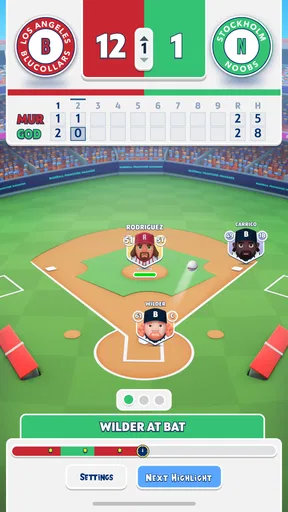
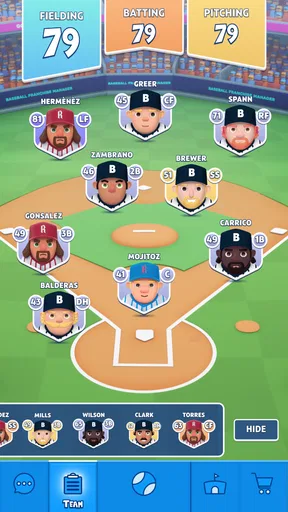
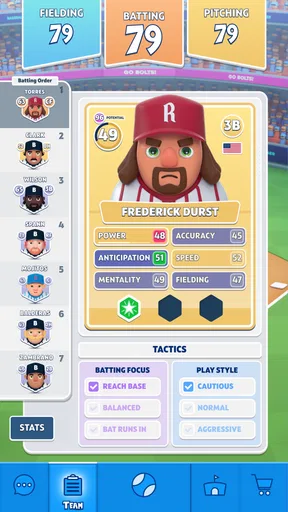
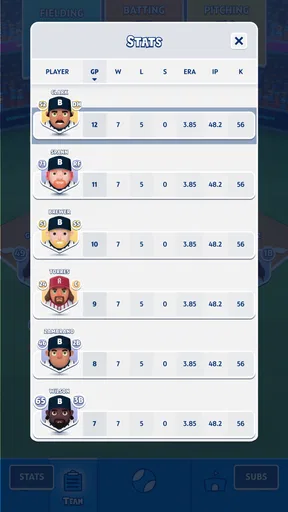

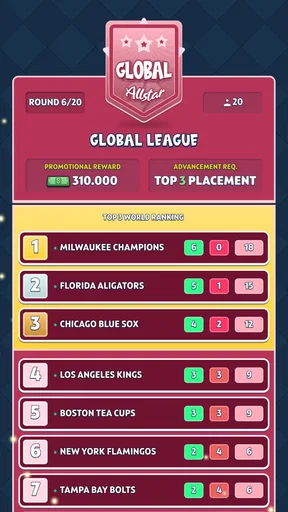
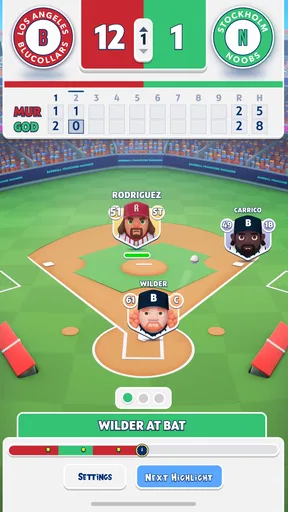
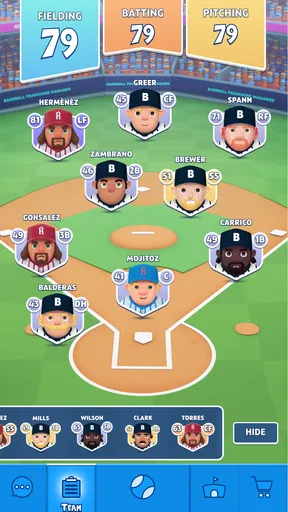
Our Review of Baseball Franchise Manager
 Analysis by Appyee
I approached Baseball Franchise Manager as a game for people who enjoy the decisions behind baseball as much as the action on the field. You are not simply choosing pitches or controlling a single player. The appeal is in taking responsibility for a team, making personnel choices, developing a roster, and trying to turn a collection of players into a winning franchise. That makes it a sports management game rather than a traditional baseball title.
My first impression was that its strongest idea is also the main test: the fun depends on whether you enjoy planning more than constant hands-on action. If you want a quick arcade match, this is probably the wrong direction. If you like comparing options, thinking several moves ahead, and accepting that a poor decision may take time to correct, the concept has much more to offer.
It is free to play and aimed at Everyone, which makes it easy to try without committing money at the start. Grand Pike AB is the developer, and the game sits in the Sports category. Its current version is 1.0.56, with support beginning at Android 7.1, so it is accessible to a broad range of Android devices.
Getting past the first decisions without losing the thread
I’d use this section to make the early choices feel manageable: first identify the roster’s most noticeable need, then decide what scouting, training, a trade, or a draft choice could realistically address it. I find that changing one thing at a time makes the next result easier to interpret, and it sets up the more detailed first-session workflow that follows.
Where new managers can get stuck
The opening phase of a franchise manager can feel less immediately rewarding than a conventional baseball game. There is no guarantee that every choice will produce a visible result right away. Scouting, drafting, trading, and training are connected decisions, so a player who expects instant feedback may wonder whether the game is doing enough.
I found it useful to treat the first session as orientation rather than as a race to improve everything at once. A new manager can easily spread attention too widely: trying to strengthen every position, changing plans after one disappointing result, and spending resources before understanding what the roster actually needs. The better approach is to identify one weakness, watch how the team responds, and then make the next adjustment.
This matters because management games often punish unfocused activity more than inactivity. A trade that looks attractive in isolation may not solve the weakness that is affecting the team most. Likewise, training a promising player may be more valuable than making a short-term move for a familiar name. I would begin by asking a simple question after each result: what problem is this decision meant to solve?
The game’s average rating is 3.4 from over one hundred ratings, with more than twenty written reviews. That is a mixed reception rather than a clear signal that everyone will enjoy it. In my view, the rating makes sense for a niche management game: players who want strategic control may appreciate the format, while people looking for a polished, immediately dramatic baseball experience may find the pace or presentation less satisfying.
Setup checks before blaming the game
Because this is a mobile game, I would start with basic preparation before judging the experience. Install it on a device running Android 7.1 or newer, make sure the operating system is reasonably up to date, and leave enough free storage for the installation and later updates. These are simple checks, but they prevent a surprising amount of confusion when a game appears slow, fails to install, or behaves inconsistently.
I also recommend opening the game when the phone is not overloaded with other demanding apps. A management title may not look graphically intense, but menus, background processes, and network activity can still compete for memory and battery. Closing unused apps, restarting the phone, and trying again is a sensible first step if the game freezes during loading or returns to the home screen.
If the installation is interrupted, I would avoid repeatedly tapping the install button. First check the connection, confirm that the device has room, and then retry once the connection is stable. Switching between a weak mobile signal and an unreliable Wi-Fi connection can leave any download in an awkward state. A clean retry is usually more useful than repeatedly forcing the same attempt.
The game is free to download, but it includes optional in-app purchases ranging from $1.99 to $104.99 per item. I would decide before playing whether I want to keep the experience entirely free. That decision helps prevent an impulsive purchase when progress feels slow. For a management game, patience is part of the experience, so paying should be a deliberate choice rather than a reaction to one frustrating result.
A practical first-session workflow
My preferred opening routine is deliberately conservative. I would inspect the roster, note the most obvious gap, and make only a small number of changes before observing the next outcome. This creates a useful baseline. If you alter several parts of the team at once, it becomes difficult to tell which move helped and which one created a new problem.
Scouting deserves attention before drafting or trading. Even without trying to optimize every detail, the order matters: understand what is available, decide which type of player fits the roster, and only then commit to a move. This prevents the common mistake of choosing the most appealing option rather than the most suitable one.
Training should also be tied to a role. I would not treat development as a general button to press whenever it is available. Think about whether the player is meant to fill a current weakness, become a future starter, or provide depth. That distinction helps avoid investing effort in a player who does not fit the direction of the franchise.
A useful habit is to keep a mental record of decisions for a few sessions. You do not need a spreadsheet. Simply remember why you made a trade, what you expected from training, and whether the next results supported that reasoning. This turns the game from a sequence of isolated taps into a small experiment, which is where the management appeal becomes clearer.
Recovering when a plan goes wrong
Every franchise-management game needs a recovery mindset, and this one is easier to enjoy when you accept that not every move will work. If a trade fails to improve the team, resist the urge to immediately make another dramatic move. Give yourself time to see whether the problem was the player, the role, the surrounding roster, or simply a short run of poor results.
If progress seems to stall, return to the basics rather than changing everything. Review the roster again, identify the most urgent gap, and choose one adjustment. A smaller correction gives you information. A complete rebuild may feel active, but it can make the cause of the problem impossible to identify.
When the interface seems unresponsive, first distinguish between a temporary loading issue and a gameplay decision that has not produced an immediate result. Wait briefly, check whether another screen responds, and restart the app if necessary. If the problem repeats, restart the device and confirm that the game and operating system are compatible with one another. These are safe general troubleshooting steps that do not alter your team or encourage risky workarounds.
I would also avoid clearing app data as an early fix. On any game where progress may be stored locally or linked to an account, removing data can create an avoidable loss. Try closing and reopening the game first, then restarting the phone. If the issue remains, use the normal support route associated with the app rather than experimenting with system files or unofficial downloads.
When the app may not be the cause
Some frustrations are easy to blame on the game even when the real cause is the phone or connection. A device with very little free storage can make installation and updates unreliable. A battery-saving mode may restrict background activity. An unstable connection can make loading feel like a gameplay delay. Before deciding that the game is broken, I would test it after charging the device, closing other apps, and using a more dependable connection.
Performance can also vary with the age and condition of the phone. Android 7.1 is the minimum operating system, but meeting a minimum requirement does not mean every device will feel equally responsive. Older hardware may take longer to open menus or switch screens, especially when the phone is warm or busy. That is a device limitation worth separating from the quality of the management design.
Purchasing concerns deserve the same careful distinction. The game is free to play, but the presence of paid items means I would check the purchase confirmation on the device before approving anything. If a payment appears unfamiliar, review the account’s purchase history and the device’s payment settings rather than assuming the game has malfunctioned. Keeping purchase controls protected is especially sensible when the content rating is Everyone.
The age rating makes the game suitable for a broad audience, but suitability does not mean it will suit every playing style. Younger players may enjoy the baseball theme, while the slower strategic rhythm may appeal more to someone who likes planning. Parents or guardians should still decide whether optional purchases fit their household rules, particularly because the available item range reaches well beyond a casual one-time purchase.
How it compares with the usual baseball alternatives
The clearest comparison is with action-focused baseball games. Those titles put the emphasis on timing, controls, and the excitement of individual plays. Baseball Franchise Manager takes a different route. Its central question is not whether you can hit a ball yourself, but whether you can make sensible decisions about a team over time.
That difference affects the ideal session. An arcade baseball game is usually better when you want immediate involvement for a few minutes. This game is better when you want to check a roster, make a considered adjustment, and return later to see whether the plan worked. I would choose it for a quiet commute or a short planning break, not for the kind of fast, controller-like action that keeps your hands busy every second.
It also differs from a spreadsheet-heavy simulation. A deep simulator may offer more detail for experienced fans who want to model every aspect of a professional organization. This title is more approachable because its appeal is built around recognizable franchise tasks: scouting, drafting, trading, training, and trying to win. The trade-off is that players seeking extremely granular realism may eventually want a more specialized simulation.
Another alternative is simply following real baseball. Watching a game gives you drama that no management screen can reproduce, while this app gives you responsibility for decisions that a spectator does not control. I see the game as complementary rather than competitive with live sports. It is for the moments when you want to construct the story yourself instead of waiting for the next result.
Who will get the most from it
I would recommend it to someone who enjoys roster building and does not need every session to deliver instant excitement. It is particularly suitable for players who like weighing short-term results against longer-term development. The free entry point makes it easy to test that style without paying first.
A realistic everyday use case would be a player checking the team during a lunch break. You review the roster, notice that one area needs attention, make a measured move, and close the game. Later, you return to judge whether the change helped. That rhythm suits a management game much better than trying to rush through every available decision in one sitting.
I would be more cautious recommending it to someone who wants direct baseball controls, a strong visual spectacle, or a game that explains every consequence immediately. The management format asks you to tolerate uncertainty and learn from outcomes. If that sounds like work rather than entertainment, an action-oriented sports game will probably be a better choice.
My practical verdict after weighing the friction
Baseball Franchise Manager has a focused identity. It is not trying to replace a traditional baseball match; it is offering the role of the person responsible for building the team. The combination of scouting, drafting, trading, training, and competition gives the game a useful decision-making loop, especially for players who enjoy seeing a plan develop gradually.
Its limitations are equally clear. The slower management structure may feel underwhelming if you want immediate action, and the mixed average rating suggests that the experience will not satisfy every sports fan. Setup and performance problems should be checked methodically before being blamed on the game, while the optional purchases call for sensible spending controls.
For me, the best way to approach it is patiently: install it on a compatible device, begin with small roster changes, connect training to a clear purpose, and treat setbacks as information rather than emergencies. The strongest reason to try it is the feeling of making baseball decisions over time, not the promise of instant match-day excitement.
With over ten thousand installs, it has found an audience large enough to make the concept worth exploring, while its 3.4 average shows why expectations should remain realistic. I would try the free version if you like sports strategy and want a lightweight franchise-management experience. I would skip it if your ideal baseball game is defined by direct control, rapid action, or highly detailed simulation depth.
In short, Grand Pike AB’s game is best treated as a thoughtful roster-and-team project. Give it a calm first session, avoid changing everything at once, and decide early whether its pace suits you. If it does, the satisfaction comes from recognizing that a better season began with one well-judged decision.
Verdict
Strengths of Baseball Franchise Manager
- Deep roster management for fans who enjoy long-term franchise planning.
- Realistic baseball statistics make player development feel rewarding.
- Multiple strategic decisions keep each season engaging.
- Runs smoothly on most modern Android and iOS devices.
- Offline play lets you manage your team without a constant connection.
Limitations of Baseball Franchise Manager
- The interface can feel dense and take time to learn.
- Matches may seem slow for players who prefer hands-on gameplay.
- Some advanced features may require in-app purchases.
- Limited visual presentation compared with full baseball simulation games.
- Long seasons demand considerable time and patience to complete.
Similar Picks in This Category
View All
8 Ball Pool
Miniclip.com4.8

Pooking - Billiards City
AIM TOP GAME TECHNOLOGY LIMITED - pool4.6

Carrom Pool: Disc Game
Miniclip.com4.4

EA SPORTS FC Soccer Mobile 26
ELECTRONIC ARTS4.6

World Soccer League
mobirix4.3

Soccer Cup 2026: Football Game
INLOGIC SPORTS - football tennis golf soccer4.3
Frequently Asked Questions
What is Baseball Franchise Manager?
Baseball Franchise Manager is a sports management game focused on building and running your own baseball organization. Instead of controlling every pitch directly, you take responsibility for important franchise decisions such as roster construction, player development, contracts, scouting, trades, and team strategy. It is designed for users who enjoy long-term planning, statistics, and the challenge of turning a struggling club into a successful franchise.
How does gameplay work in Baseball Franchise Manager?
Gameplay revolves around managing the team throughout a season and making decisions that influence results over time. You can evaluate players, adjust lineups, handle pitching staff, negotiate transactions, and plan for future seasons. Matches are generally experienced through management choices and simulated outcomes rather than traditional real-time action controls, making the game better suited to baseball fans who enjoy analysis and decision-making.
Is Baseball Franchise Manager suitable for beginners?
The game can be enjoyed by beginners, although its management systems may feel detailed at first. New players need to learn how player ratings, finances, scouting, contracts, and team chemistry affect performance. The best approach is to begin with a simple roster strategy, avoid making too many changes at once, and use early seasons to understand the menus and statistics before attempting a complete rebuild.
Does Baseball Franchise Manager require an internet connection or include in-app purchases?
Requirements can vary depending on the version available through the Android or iOS store. Some features may work offline, while downloads, updates, cloud services, advertisements, or certain online functions may require an internet connection. Before installing, users should check the current store listing for information about in-app purchases, advertising, supported devices, account requirements, and any limitations that may affect the management experience.
What should I know before downloading Baseball Franchise Manager?
Before downloading, keep in mind that this is primarily a strategy and simulation experience rather than an arcade baseball game. Its appeal comes from planning, statistics, roster decisions, and watching the consequences of your choices develop across a season. Players who prefer fast action may find the pace slow, while fans of realistic franchise management should appreciate the depth and replay value it offers.
Play our best games!


